From Traditional Water Wisdom to Urban Biodiversity: Reflections from a Meeting with the Income Tax Commissioner (Exemptions), Gujarat, Daman and Diu
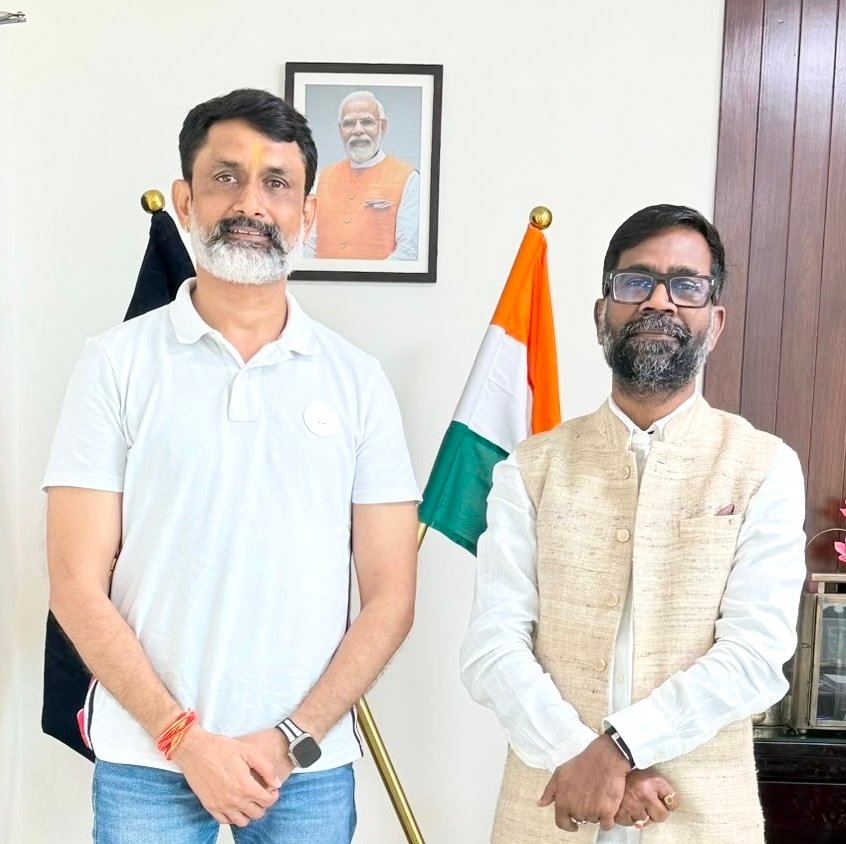
We had the opportunity to meet and have a detailed and meaningful discussion with Mr. V. Nandkumar, Income Tax Commissioner (Exemptions), Gujarat, Daman and Diu, on a range of issues connected with environmental conservation, sustainable development, disaster resilience, biodiversity enhancement and the evolving role of civil society organisations in addressing the ecological challenges confronting India. The interaction provided an important opportunity to present the work and perspectives of Drishti Foundation Trust, a Research and Development organisation engaged in community-oriented initiatives, while also reflecting on the larger responsibility of institutions, governments, industry, academia, civil society and young people in shaping a more sustainable future. The discussion was not limited to one particular environmental intervention. It covered a broad spectrum of interconnected themes, including disaster relief and resilience, river rejuvenation, marine conservation, water conservation, biodiversity enhancement, Miyawaki plantation technology, the importance of indigenous species in urban development, the need for scientific tree census in cities, identification and environmental conservation of forest locations, revival of traditional water conservation systems such as stepwells and Bavlis, and the need to bring young minds into environmental action.
We also discussed how civil society organisations can establish meaningful partnerships with industry leaders, technical experts, researchers and professionals so that social and environmental interventions are supported by knowledge, innovation and scientific expertise. The meeting reaffirmed an important principle: environmental conservation cannot be treated as a collection of isolated projects. A river, forest, wetland, tree, bird, mangrove ecosystem, groundwater system, traditional water structure or urban green space is part of a larger ecological network. Damage to one component often affects many others. Similarly, restoration of one ecological system can generate benefits across several dimensions of human well-being. Therefore, environmental action must move from fragmented activities towards integrated ecological planning.
For Drishti Foundation Trust, this approach is particularly important because our work has evolved around the understanding that environmental conservation, community development, disaster response, water security and sustainable development are deeply interconnected. The organisation has worked on several environmental and community-oriented initiatives and has consistently sought to bring together local communities, institutions, experts, corporates, government agencies, educational institutions and volunteers. The discussion with the Commissioner also created an opportunity to reflect on the changing nature of environmental challenges in India. The country is experiencing rapid urbanisation, infrastructure expansion, changing rainfall patterns, increasing pressure on natural resources, loss of biodiversity, degradation of water bodies, increasing waste generation and growing demand for land and water. These pressures are occurring alongside the urgent need for economic growth, employment generation and improved living standards. The challenge before India is therefore not simply to conserve nature, but to develop models of development in which economic and social progress can coexist with ecological security.
Disaster Relief Must Evolve into Disaster Resilience
One of the important subjects discussed during the meeting was disaster relief and the broader question of disaster resilience. India is exposed to multiple forms of disasters, including floods, cyclones, droughts, heat waves, landslides, earthquakes and other climate-related emergencies. In recent years, communities have increasingly experienced events that can disrupt livelihoods, damage infrastructure, affect agricultural production and create prolonged humanitarian challenges. Disaster relief is essential because immediate humanitarian assistance can save lives and protect vulnerable communities. However, relief alone cannot address the structural factors that make communities vulnerable. A comprehensive approach must include preparedness, mitigation, early warning, community capacity building, ecological restoration, resilient infrastructure and post-disaster rehabilitation. Natural ecosystems themselves can function as disaster mitigation systems. Wetlands can absorb excess water, mangroves can reduce the impact of coastal storms, forests can stabilise soil and regulate water flows, rivers can function properly when their floodplains remain protected, and healthy landscapes can improve groundwater recharge. When these natural systems are degraded, communities often become more vulnerable to disasters. This is why disaster management and environmental conservation should not be considered separate sectors. River rejuvenation can contribute to flood management. Wetland restoration can support water security and biodiversity. Mangrove restoration can contribute to coastal resilience. Urban tree cover can moderate heat and improve microclimates. Watershed management can reduce soil erosion and support agricultural communities. The role of NGOs in this context is significant. Civil society organisations can work directly with communities before, during and after disasters. They can mobilise volunteers, identify vulnerable households, support relief distribution, document local needs and help communities understand disaster preparedness. More importantly, NGOs can remain engaged after the immediate crisis has passed and support long-term recovery and ecological restoration. Drishti Foundation Trust has been associated with disaster relief and response activities and believes that future interventions should increasingly integrate disaster preparedness with environmental restoration. The objective should be to help communities become less vulnerable rather than merely helping them recover after every disaster.
Rivers Are Ecological Systems, Not Merely Water Channels
River rejuvenation was another major theme of the discussion. India’s rivers have historically shaped its civilisation, agriculture, culture and settlement patterns. However, many rivers and smaller streams are facing serious pressures due to pollution, encroachment, reduction in natural flows, sand mining, untreated wastewater, solid waste, destruction of riparian vegetation and changes in land-use patterns. A river cannot be restored merely by cleaning its visible surface. Genuine river rejuvenation requires an understanding of the entire river system, including its catchment, tributaries, wetlands, floodplains, groundwater interactions, riparian vegetation and human settlements. River rejuvenation should therefore begin with scientific assessment. The first requirement is to understand the river’s physical and ecological condition. Mapping of the river channel, identification of pollution sources, assessment of water quality, analysis of seasonal flow patterns, identification of encroachments and mapping of wetlands and recharge zones can provide a scientific foundation for intervention. The second requirement is restoration of ecological functions. Riparian vegetation can help stabilise riverbanks, provide habitat and improve ecological connectivity. Wetlands associated with river systems should be protected because they provide important ecological services. Local communities should also be involved because their livelihoods and daily lives are often closely connected to rivers. The third requirement is long-term monitoring. River rejuvenation cannot be considered complete after a plantation drive, cleaning campaign or infrastructure project. The river must be monitored over time to determine whether water quality, biodiversity, groundwater recharge, vegetation and ecological functions are improving. Drishti Foundation Trust has been exploring river rejuvenation, and environmental water and environmental conservation initiatives, including work related to river systems and traditional water structures. The organisation’s objective is to develop approaches that combine scientific knowledge with community participation and traditional ecological understanding. The discussion also reinforced the idea that river restoration should not be restricted to major rivers. Small rivers, seasonal streams, local drains, village ponds and urban water channels can play critical roles in watershed systems. In many locations, restoring a small tributary or recharge zone can generate significant benefits for the larger river system.
Marine Conservation and the Coastal Ecological Connection
Marine conservation is another important area in which environmental organisations need to increase their engagement. India’s extensive coastline supports mangroves, coral ecosystems, estuaries, mudflats, seagrass habitats, fisheries and a wide range of marine and coastal biodiversity. Coastal ecosystems provide enormous ecological and economic value. Mangroves, for example, provide habitat for numerous species, support fisheries, protect shorelines and contribute to carbon storage. Yet coastal ecosystems face pressures from pollution, habitat conversion, development, plastic waste, climate change and other human activities. The discussion highlighted the importance of understanding marine conservation as an extension of terrestrial environmental management. What happens on land eventually affects coastal ecosystems. Plastic waste, untreated wastewater, agricultural runoff and other pollutants can enter rivers and ultimately reach the sea. Therefore, marine conservation must begin upstream. Mangrove restoration can be one important component of coastal conservation, but it must be undertaken scientifically. Planting mangroves in unsuitable locations or using inappropriate species can be counterproductive. Restoration should be based on tidal conditions, soil characteristics, hydrology, existing vegetation and local ecological conditions. Drishti Foundation Trust has been involved in marine and coastal conservation initiatives, including mangrove plantation activities and biodiversity awareness. Such interventions demonstrate how environmental conservation can combine ecological restoration with educational engagement, particularly through the participation of students and young volunteers.Marine conservation also provides an opportunity to connect communities with biodiversity. Fisher communities, coastal residents, students, researchers, tourism stakeholders and local institutions can all play roles in protecting marine ecosystems. A conservation model that recognises local livelihoods while protecting ecological systems is more likely to achieve long-term success.
Water Conservation Is a Question of Ecological Security
Water conservation emerged as one of the central themes because water is the foundation of human civilisation and ecological stability. India’s water challenges are becoming increasingly complex. Population growth, urbanisation, industrialisation, agricultural demand and climate variability are increasing pressure on both surface water and groundwater resources. Water conservation must therefore go beyond constructing isolated structures. It requires management of the complete hydrological cycle. Rainwater should be captured where it falls. Soil should be allowed to absorb water wherever possible. Urban surfaces should not unnecessarily prevent groundwater recharge. Traditional ponds, tanks, stepwells, lakes and other water bodies should be restored. Watersheds should be treated as ecological units. Rivers and streams should retain their natural functions. Urban areas require particular attention. Rapid urbanisation often replaces permeable soil with concrete surfaces, reducing natural groundwater recharge. At the same time, stormwater is rapidly discharged through drainage systems, resulting in flooding during intense rainfall while groundwater levels continue to decline. This contradiction demonstrates the need for integrated urban water management. Cities should retain rainwater, restore urban lakes and wetlands, create recharge zones and protect natural drainage channels. The revival of traditional water systems can play a significant role in this effort.
Reviving Stepwells and Bavlis: Traditional Knowledge for Modern Challenges
One of the most interesting aspects of the discussion was the role of NGOs in reviving ancient water conservation techniques such as stepwells and Bavlis. India possesses a remarkable heritage of traditional water management systems. Across different regions, communities developed stepwells, tanks, ponds, johads, baolis, Bavlis, kunds, canals and other structures adapted to local climatic and geological conditions. These structures were not merely architectural monuments. Many were sophisticated water management systems designed to collect, store, access and conserve water. Modern development has often reduced the functional role of these structures. Some have been abandoned, polluted, encroached upon or forgotten. Yet many remain physically recoverable and could potentially contribute to local water security if scientifically restored. The revival of a stepwell should not be approached simply as heritage beautification. It should be approached as ecological restoration combined with cultural conservation. A restoration programme can begin with documentation. Historical records, local knowledge, architectural surveys, hydrological assessments and geographical mapping can help determine the original function of a structure. The next stage should involve structural environmental conservation, desilting, catchment restoration, removal of waste and restoration of natural recharge pathways where appropriate. Community participation is essential. Local residents should understand why the structure matters and how it can contribute to contemporary water security. Schools and colleges can adopt nearby heritage water structures as educational sites. Universities can undertake research on traditional water systems. Corporate partners can support restoration through CSR programmes. Drishti Foundation Trust has been exploring the restoration of historical stepwells and other traditional water conservation systems. The larger vision is to demonstrate that India’s traditional ecological knowledge can complement modern science. There is no need to choose between tradition and technology. The most effective solutions may emerge when traditional knowledge is validated, adapted and strengthened through contemporary scientific methods. Miyawaki Technology and the Question of Urban Forests The discussion also covered the use of Miyawaki plantation technology and its relevance to urban development. The Miyawaki approach has attracted considerable attention because it focuses on creating dense, multi-layered vegetation using carefully selected species, often with an emphasis on native plants. In suitable conditions, such plantations can establish relatively quickly and create compact green habitats.However, the success of any Miyawaki project depends on proper ecological planning. It should not become merely a high-density plantation formula applied indiscriminately. The first consideration must be the site’s ecological suitability. Soil condition, water availability, land history, local climate and surrounding biodiversity should be assessed. Species should be selected according to the local ecological context rather than simply based on availability from nurseries. The second consideration is species composition. Indigenous and locally appropriate species are critical because native biodiversity has evolved within particular ecological systems. Native trees can provide food and habitat for local birds, insects, pollinators and other organisms. The third consideration is maintenance during establishment. A plantation cannot be considered successful simply because thousands of saplings were planted. Survival rate, canopy development, species diversity, soil improvement and biodiversity outcomes should be measured. The fourth consideration is long-term ecological function. An urban forest should ideally provide shade, habitat, carbon storage, improved microclimate, soil protection and opportunities for human interaction with nature. Miyawaki plantations can therefore be one tool within a larger urban biodiversity strategy. They should complement, rather than replace, the protection of existing mature trees, natural forests, wetlands, grasslands and other habitats.
Indigenous Species Must Become Central to Urban Development
The importance of indigenous species in urban development was another significant subject discussed during the meeting. Urban development in India has often focused on ornamental landscaping. While ornamental plants can have aesthetic value, urban biodiversity requires a much broader approach. Native and ecologically appropriate species can provide habitat and food for birds, butterflies, bees and other organisms. A city dominated by concrete and isolated ornamental gardens cannot provide the same ecological benefits as a network of connected native vegetation. Urban planning should therefore incorporate biodiversity considerations from the beginning. Roads, parks, institutional campuses, residential developments, industrial areas, railway corridors, riverbanks and public spaces can all contribute to urban ecological networks. The selection of species should consider local ecology, water availability, canopy characteristics, root behaviour, soil requirements, biodiversity value and long-term maintenance requirements.The protection of existing mature trees should be given priority. Planting a new sapling cannot immediately compensate for the ecological functions of a mature tree. Mature trees provide larger canopies, greater habitat value, shade and carbon storage. Therefore, urban development should adopt the principle of “protect first, plant second.”
Tree Census: From Plantation Numbers to Ecological Data
The discussion on tree census was particularly relevant because environmental planning requires reliable data. In many cities, tree plantation programmes are reported primarily in terms of the number of saplings planted. However, plantation numbers alone do not tell us the ecological condition of a city. A scientific tree census should record the number, species, location, age or approximate size, health condition and ecological characteristics of trees. Geographic Information System mapping and digital databases can make such information accessible to planners and citizens. A city-level tree census can answer important questions. Where is tree cover concentrated? Which neighbourhoods have very little canopy? Which species dominate? Which native species are declining? Where are mature trees located? Which areas suffer from urban heat? Where can biodiversity corridors be developed? This information can transform urban forestry from an activity-based approach into a data-driven ecological planning system. Tree census should also include institutional and community participation. Universities can provide technical expertise. Municipal bodies can integrate the data into planning systems. NGOs can undertake field surveys and community engagement. Students can participate in biodiversity mapping exercises. Young people can therefore become an important part of India’s future ecological data network.
Mapping Forests and Ecological Locations
The identification and mapping of forest locations is equally important. Forest conservation cannot be effective if the ecological assets of a landscape are poorly documented. Forest areas, urban forests, community forests, sacred groves, wetlands, grasslands, river corridors and biodiversity-rich locations should be mapped and periodically monitored.Remote sensing, satellite imagery, GIS, drones where legally and appropriately used, field surveys and community knowledge can be combined to create more accurate ecological maps. Such mapping can help identify areas requiring restoration, areas vulnerable to encroachment and areas that can serve as biodiversity corridors.The objective should not simply be to produce maps. The information must be used in decision-making. Infrastructure planning, urban expansion, industrial development and land-use decisions should take ecological information into account.
Involving the Young Minds of India
One of the strongest themes emerging from the discussion was the need to involve young people. India has one of the world’s largest young populations. This demographic strength can become an ecological strength if young people are provided with opportunities to understand, study and protect their environment. Environmental education should move beyond textbooks. Students should be encouraged to observe local biodiversity, map trees, monitor water bodies, document traditional water systems, participate in restoration activities and conduct citizen science. A student who learns to identify ten local tree species develops a different relationship with the environment from a student who only reads about forests in a textbook. Similarly, students can participate in river monitoring, bird counts, butterfly surveys, wetland documentation and urban biodiversity mapping. Universities can establish environmental innovation labs where students develop practical solutions to local ecological problems. Engineering students can work on water and environmental conservation technologies. Geography students can map ecological systems. Biology students can document biodiversity. Architecture students can explore climate-sensitive urban design. Management students can develop models for CSR and sustainability partnerships. Young people should not be treated merely as volunteers. They should be treated as researchers, innovators, communicators and future environmental leaders.
The Role of NGOs in the Next Phase of Environmental Action
The role of NGOs is changing. Civil society organisations are increasingly expected to demonstrate not only commitment but also institutional capacity, technical competence, transparency, measurable outcomes and long-term sustainability. NGOs can occupy an important space between government, communities, academia and industry. They can translate policy into community action and bring local concerns into larger policy discussions. An effective NGO can also act as a convening institution. It can bring a municipal authority together with a university, a corporate CSR team, local communities and technical experts around a common project. For example, a stepwell restoration project can involve a local government department, archaeologists, hydrologists, architects, corporate CSR partners, students and community groups. A river rejuvenation project can involve environmental scientists, municipal authorities, industries, farmers, fishermen, schools and citizen groups. This multi-stakeholder model can significantly improve project quality.
Bringing Industry Leaders and Experts into Social Development
Another important aspect of the meeting was the question of how NGOs can obtain expert support from industry leaders for the betterment of society and enhancement of biodiversity. India has an enormous pool of expertise within its private sector. Companies have engineers, scientists, environmental professionals, project managers, data specialists, communication experts, finance professionals, architects, lawyers and technology specialists. This expertise can contribute to social and environmental projects even beyond direct financial contributions. Corporate engagement should therefore be understood in three dimensions: financial support, technical support and human capital support. A company may support a biodiversity project financially through CSR. But it can also provide technical experts to design the project, employees to participate in field activities, technology for monitoring, communication support for awareness campaigns and professional expertise for institutional strengthening. Industry leaders can also contribute as members of advisory councils, technical committees or knowledge partnerships. For NGOs, the challenge is to present projects in a manner that allows industry leaders to understand the ecological problem, proposed intervention, expected outcomes, budget, monitoring mechanism and long-term sustainability. A well-designed project should answer five fundamental questions: What is the problem? Why does it matter? What will be done? How will success be measured? What will happen after the funding period ends?
CSR Can Become a Platform for Ecological Innovation
Corporate Social Responsibility has significant potential to support environmental restoration in India. However, CSR-supported environmental projects should increasingly move beyond one-day activities. Tree plantation events, awareness programmes and clean-up drives can create visibility, but lasting environmental outcomes require multi-year planning. A CSR partner supporting urban biodiversity could potentially support a complete programme consisting of baseline tree census, biodiversity mapping, indigenous plantation, maintenance, community education and impact monitoring. Similarly, a company could support the restoration of a traditional water structure through a multi-year programme involving hydrological assessment, restoration, community engagement and monitoring. The role of NGOs is to develop credible project frameworks that provide companies with measurable and transparent outcomes.
Building a Knowledge Network for Biodiversity
Environmental conservation is fundamentally a knowledge-driven field. Local communities possess traditional knowledge. Scientists contribute contemporary research. Industry provides technology and resources. Government provides institutional authority. NGOs provide field implementation and community engagement. The future lies in connecting these knowledge systems. Drishti Foundation Trust can play a role in creating such partnerships by facilitating collaborations between experts, institutions, industry leaders and communities.A knowledge network could focus on themes such as indigenous tree species, urban biodiversity, river restoration, traditional water systems, marine conservation, disaster resilience and ecological restoration. Such a platform could organise expert consultations, workshops, field demonstrations, student programmes and research initiatives. A
Holistic Approach to Biodiversity Enhancement
Biodiversity should not be understood only as the number of species recorded in a particular location. Biodiversity is connected with ecosystems, habitats, ecological relationships and genetic diversity. Planting a large number of trees does not automatically create biodiversity. A monoculture plantation may have limited ecological value compared with a diverse native ecosystem. Biodiversity enhancement therefore requires habitat restoration. A city biodiversity programme could include native trees, shrubs, grasses, flowering plants, wetlands, bird habitats, pollinator gardens and ecological corridors. River restoration could include aquatic habitats and riparian vegetation. Coastal conservation could include mangroves and associated habitats. The goal should be to restore ecological relationships rather than simply increase the number of planted saplings.
The Need for Long-Term Monitoring
Every environmental intervention should have a monitoring framework. For plantations, monitoring should include survival rate, species growth, canopy development and biodiversity indicators. For rivers, water quality, flow, aquatic biodiversity and pollution sources should be monitored. For stepwells, water levels, recharge patterns and structural conditions should be assessed. For mangrove projects, survival and natural regeneration should be tracked. Monitoring creates accountability. It also generates knowledge. An NGO that documents both successes and challenges becomes more credible because environmental restoration is inherently complex. Not every intervention will produce the same outcome. Learning from failures is as important as documenting achievements.
From Plantation Drives to Ecological Restoration
India needs to rethink the way tree plantation is perceived.Plantation is an activity. Ecological restoration is a process.Planting thousands of saplings may be easy to report, but ensuring that those trees survive, mature and contribute to biodiversity requires long-term commitment. A better approach would combine tree census, site assessment, indigenous species selection, scientific plantation, maintenance, survival monitoring and biodiversity assessment. The objective should not be simply to increase the number of trees planted. The objective should be to increase healthy and ecologically functional green cover.This distinction is important for both government and CSR programmes.
Connecting Water, Trees, Biodiversity and Climate
The different subjects discussed during the meeting are ultimately connected.Trees influence soil and water systems. Rivers support biodiversity. Wetlands regulate water. Forests influence local climate. Mangroves protect coastlines. Traditional water systems support groundwater recharge. Urban biodiversity can reduce heat and improve human well-being. Therefore, projects should be designed around ecological systems rather than administrative categories. A water and environmental conservation project can include native plantation. A river restoration project can include biodiversity monitoring. A disaster resilience programme can include wetland restoration. An urban forestry project can include tree census. A heritage restoration project can include hydrological assessment. This integrated approach can generate greater impact from limited resources.
Towards a National Movement for Ecological Responsibility
India’s environmental future will depend on the ability of institutions to work collectively.Government agencies alone cannot address every ecological challenge. NGOs cannot do it alone. Corporates cannot do it alone. Universities cannot do it alone. Communities cannot do it alone. The solution requires collaboration. There is a need to create platforms where government institutions, NGOs, corporate leaders, universities, researchers, environmental professionals and communities can come together around specific ecological challenges. Such platforms can convert individual efforts into collective action. For Drishti Foundation Trust, this represents an important direction for the coming years. The organisation seeks to strengthen its role as a platform for research, environmental action, community engagement, youth participation and institutional collaboration.
A Vision for Drishti Foundation Trust
The interaction with Mr. V. Nandkumar provided an opportunity to reflect on the larger vision of Drishti Foundation Trust. The Foundation’s work in disaster relief, river rejuvenation, marine conservation, water conservation and biodiversity enhancement is part of a broader commitment to sustainable development. The organisation believes that environmental work must be based on three foundations: scientific knowledge, community participation and institutional collaboration. Scientific knowledge ensures that interventions are technically sound. Community participation ensures that interventions are socially relevant and sustainable. Institutional collaboration ensures that successful models can be expanded. The Foundation also believes that traditional knowledge should be treated as an important resource. India’s ancient water conservation systems, indigenous ecological practices and community-based resource management traditions contain lessons that can complement contemporary science. The objective is not to romanticise the past, but to learn from it.
A New Partnership Between Society and Nature
The central lesson from the discussion is that environmental conservation is ultimately about rebuilding the relationship between society and nature. Modern human life has become increasingly disconnected from ecological processes. Water arrives through pipelines, food arrives through markets, electricity comes through grids and waste disappears through collection systems. This convenience can sometimes make people forget the ecological systems supporting their lives. Environmental education can help restore this connection. When a child understands where drinking water comes from, how groundwater is recharged, why trees matter, where birds find food, how rivers function and why wetlands are important, environmental conservation becomes more than a policy issue. It becomes a part of citizenship. This is why young minds must be at the centre of India’s environmental future.
Conclusion: From Conversation to Collective Action
The meeting with Mr. V. Nandkumar, Income Tax Commissioner (Exemptions), Gujarat, Daman and Diu, was an important opportunity to exchange perspectives on the role of civil society and institutions in addressing India’s environmental and developmental challenges. The discussion covered a wide range of issues, but a common thread connected all of them: India’s future depends on the health of its ecological systems. Disaster relief must evolve towards disaster resilience. Rivers must be treated as living ecological systems. Marine and environmental conservation must be connected with land-based environmental management. Water and environmental conservation must include both modern science and traditional knowledge. Miyawaki technology must be applied responsibly and in appropriate ecological contexts. Indigenous species must receive greater importance in urban development. Cities should develop scientific tree censuses and biodiversity databases. Forests and ecological locations should be mapped and monitored. Stepwells, Bavlis and other traditional water systems should be revived as both heritage assets and potential components of modern water security.
Young people must be encouraged to become environmental researchers, innovators and community leaders. Industry leaders should be invited to contribute not only CSR funding but also technical expertise, technology, human resources and institutional knowledge. The future of environmental conservation in India will not be created by one organisation, one government department or one sector. It will be created through partnerships. NGOs can serve as bridges between communities and institutions. Industry can contribute resources and expertise. Universities can contribute research and young talent. Government can provide policy and institutional support. Communities can provide local knowledge and stewardship. Young people can provide energy, innovation and a long-term perspective. The task before us is therefore not simply to plant more trees, clean more rivers or restore more water structures.
The larger task is to build an ecological culture in which development decisions recognise the value of biodiversity, water, forests, rivers, wetlands and traditional knowledge. India has both an extraordinary ecological heritage and an enormous human resource of young minds. If these two strengths can be connected through science, community participation, responsible industry engagement and institutional collaboration, the country can develop a distinctive model of sustainable development. The conversation today reinforced my belief that the environmental challenges of the twenty-first century require us to look simultaneously towards the future and towards the wisdom embedded in our past. The stepwell and the smart city, the indigenous tree and the modern urban forest, the river and the research laboratory, the community volunteer and the corporate expert, the young student and the experienced environmentalist should not be viewed as separate elements.
They can become parts of one larger movement for ecological security. As Founder of Drishti Foundation Trust, I believe that the responsibility of our generation is to create conditions in which future generations inherit not merely infrastructure and economic assets, but healthy rivers, functioning wetlands, thriving forests, diverse ecosystems, clean water and a society that understands its dependence on nature. The journey from traditional water wisdom to modern biodiversity conservation is therefore not a journey backwards. It is a journey towards a more balanced future. The need of the hour is to transform ideas into action, action into measurable outcomes, and successful outcomes into replicable models. Through collaboration with government institutions, industry leaders, academic institutions, technical experts, communities and young people, Drishti Foundation Trust remains committed to contributing to this larger national effort.
Environmental conservation is not only about protecting nature. It is about protecting the foundations of human civilisation itself.
By Dinesh Kumar Gautam, Founder, Drishti Foundation Trust
“Reach out to explore collaborations, discover our initiatives, and contribute to creating meaningful, lasting change.”
Facebook: https://www.facebook.com/DrishtiFoundationTrust/
Instagram : https://www.instagram.com/drishtifoundation
Youtube : https://www.youtube.com/drishtifoundationtrust
Linkedin : https://www.linkedin.com/company/drishtifoundationtrust
Twitter : https://www.twitter.com/dftindia
Related Post
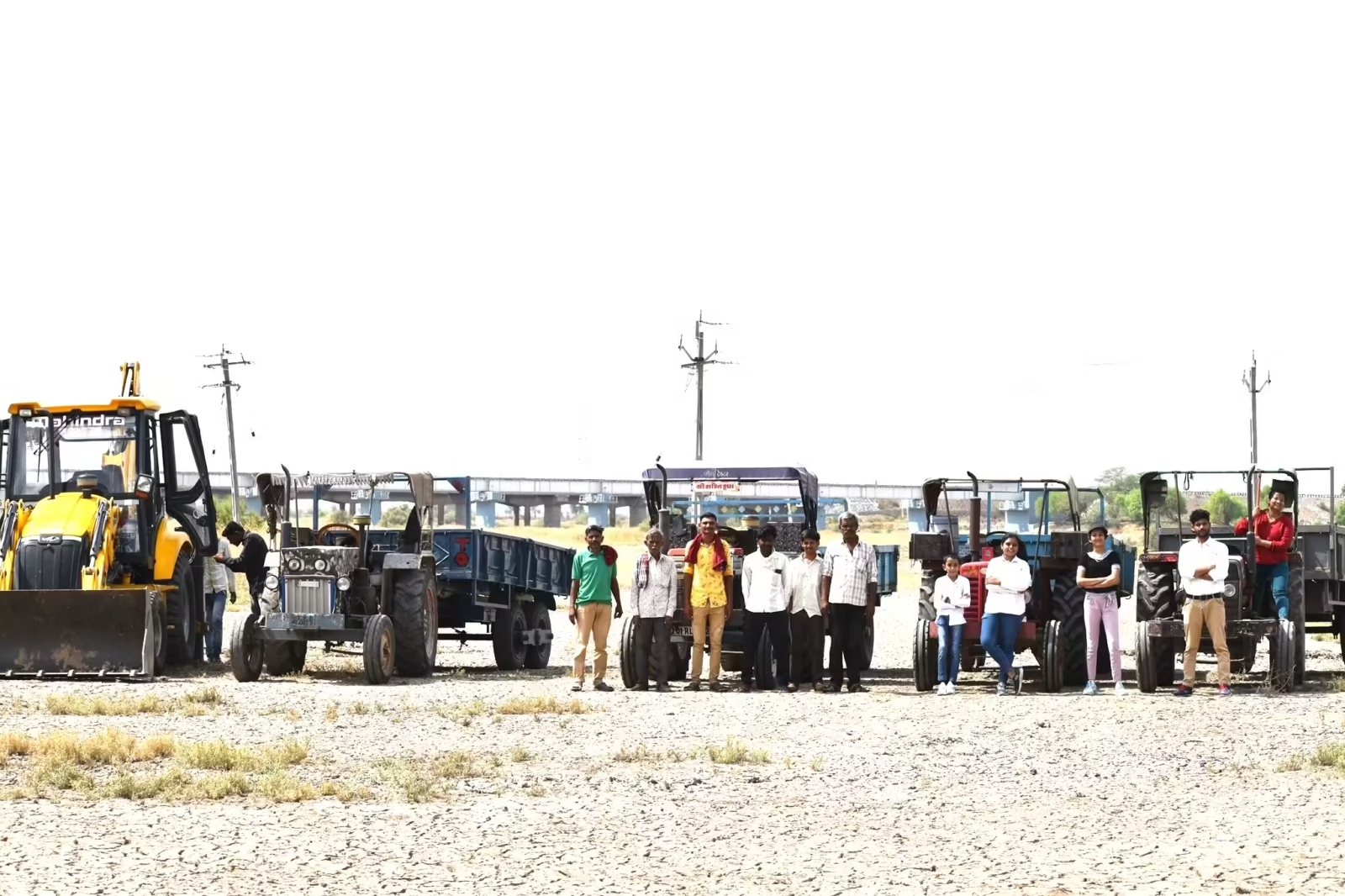
Drishti Foundation Trust’s Water Conservation Efforts: A Journey Through Sujalam Sufalam Jal Sanchay Abhiyan and the Bhogavo River Initiative
Drishti Foundation Trust's Water Conservation Efforts: A Journey Through Sujalam Sufalam Jal Sanchay Abhiyan and [...]
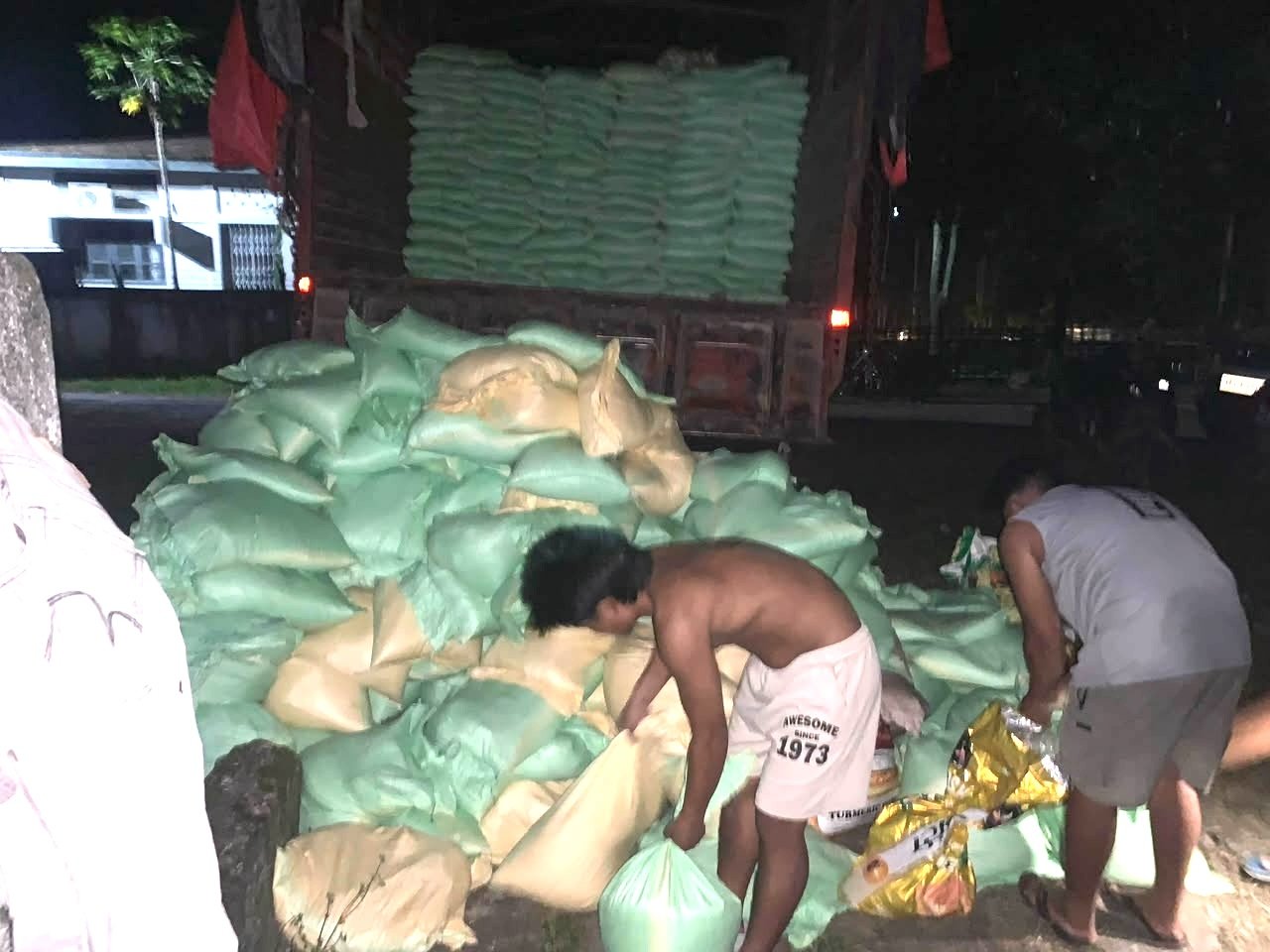
Shadows to Sunlight: How Drishti Foundation Trust Bridges the Last Mile in India’s Toughest Disaster Zones
rom Gujarat to Arunachal Pradesh, Drishti Foundation Trust’s volunteers are always on their toes for [...]