The Decoupling of Climate Action and Ecosystem Integrity
For the better part of three decades, the global environmental discourse operated under a reductionist framework that equated ecological sustainability almost entirely with carbon management. This “carbon tunnel vision” treated trees merely as sticks of sequestered carbon and oceans as inert thermal sinks, ignoring the complex biological networks that make life on Earth possible. However, the global landscape has undergone a profound transformation. The international community has realised that treating carbon isolation as a silver bullet has led to unintended ecological consequences, such as replacing biodiverse native forests with monoculture timber plantations that store carbon but completely collapse local food webs and water tables. Today, the environmental movement is experiencing a massive correction, establishing Biodiversity as the true baseline currency of global conservation.

This paradigm shift is driven by a critical realization: carbon storage is not an independent function, but an ecosystem service that relies entirely on biological diversity. A hyper-diverse ecosystem is infinitely more resilient to climate shocks, invasive species, and disease than a monoculture system, making its long-term capacity to buffer humanity against climate change far more reliable. At the Drishti Foundation Trust, our research emphasizes that this is not just an ecological pivot, but an economic and humanitarian necessity. By valuing biodiversity alongside carbon, we move away from abstract, distant carbon offsets and move toward the protection of local ecosystems. This direct investment shields the world’s most vulnerable populations from extreme weather while unlocking new, localized financial mechanisms.
Regulatory Catalysts: The High Seas Treaty and the TNFD Mandate
This transition from carbon metrics to biodiversity valuation is accelerated by two monumental shifts in international governance and corporate finance. The first of these is the official enforcement of the landmark High Seas Treaty, an international legally binding instrument under the UN Convention on the Law of the Sea. By establishing large-scale marine protected areas in international waters, this treaty has forced a global re-evaluation of ecological connectivity. It acknowledges that the health of coastal zones where human communities live, fish, and build infrastructure is inextricably linked to the biological integrity of the open ocean. The treaty has effectively globalized the responsibility for marine biodiversity, setting a legal precedent that protects life-support systems rather than just territorial economic zones.
Simultaneously, the global private sector is experiencing a massive regulatory shock with the widespread adoption of the Taskforce on Nature-related Financial Disclosures (TNFD) framework. Much like its predecessor, the TCFD, which forced corporations to report their carbon footprints and climate risks, the TNFD requires institutions to disclose their dependencies and impacts on the natural world. Under the TNFD, biodiversity loss is no longer classified as a vague corporate social responsibility concern; it is treated as a material financial risk. Corporations, banks, and asset managers are now legally and financially accountable for the destruction of local ecosystems within their supply chains. This shift transforms biodiversity from an abstract ethical goal into a tangible liability or asset on a corporate balance sheet, driving hundreds of billions of dollars toward verifiable, nature-positive projects.
The Economic Architecture of Local Ecosystems
When we look beyond carbon, we uncover the massive, unpriced economic value generated by local ecosystems like wetlands, mangroves, and native forests. For centuries, traditional economics treated these ecosystems as “unproductive lands” that only gained value when drained, logged, or paved over for real estate. In the modern economic landscape, this view is financially obsolete. Local ecosystems are highly efficient, self-sustaining economic infrastructures that provide critical services to human communities completely free of charge.
Mangroves: The Triple-Yield Assets of Coastal Economies
Mangrove ecosystems are perhaps the most financially productive environments on earth when evaluated through a biodiversity lens. Beyond their incredible carbon-sequestration capacity often referred to as blue carbon—mangroves serve as the primary nurseries for over 70% of commercial fish and shellfish species. When a coastal community protects its mangroves, it is directly investing in its long-term food security and local fishing economy. Furthermore, the complex root systems of biodiverse mangrove forests act as natural water filtration mechanisms, trapping heavy metals, agricultural runoff, and microplastics before they reach the open ocean, saving municipalities millions of dollars in water treatment costs.
Wetlands: The Earth’s Financial Shock Absorbers
Similarly, inland wetlands and marshes are highly effective natural water management systems. A biodiverse wetland functions like a giant, organic sponge, absorbing vast amounts of precipitation during heavy rainfalls and slowly releasing it during dry periods. This natural regulation provides immense economic stability to local agricultural zones by maintaining a stable water table and preventing the catastrophic soil erosion that wipes out seasonal crops. Additionally, the unique biological communities within wetlands ranging from specific reed species to specialized microbes break down pollutants, recycle nutrients, and naturally purify water supplies, protecting local communities from water-borne diseases and industrial toxicity.
Native Forests: Biological Engines of Hydrological Security
Unlike commercial timber plantations, native, biodiverse forests are complex hydrological networks that directly regulate regional weather patterns. The diverse canopy structures of native forests slow down rainfall impact, allowing water to gently seep into the ground and recharge deep underground aquifers. This process ensures a steady supply of clean freshwater for nearby cities and farming communities, even during extended droughts. When these forests are cleared or replaced by monocultures, the local water cycle breaks, leading to severe topsoil erosion, immediate flash flooding during monsoons, and extended agricultural droughts that devastate regional economies.
Disaster Protection as a Quantifiable Financial Asset
One of the most compelling arguments for treating biodiversity as the new currency of conservation is its direct role in Disaster Risk Reduction (DRR). As global weather patterns become increasingly volatile, the financial cost of repairing destroyed infrastructure is spiralling out of control. Traditional engineering solutions—such as concrete sea walls, artificial levees, and storm surge barriers are incredibly expensive to build, require constant maintenance, and frequently fail when pushed past their design limits. Biodiverse ecosystems, on the other hand, provide superior, self-repairing protection against natural disasters at a fraction of the cost.
Traditional Engineering (Concrete Sea Walls)
[High Capital Cost] -> [Constant Maintenance] -> [Structural Degradation] -> [Failure under Extreme Stress]
Nature-Based Solutions (Biodiverse Mangroves)
[Low Initial Cost] -> [Self-Repairing Growth] -> [Ecosystem Yields (Fish)] -> [Adaptive Barrier to Storm Surges]
Mitigating Storm Surges and Cyclones
Coastal ecosystems act as the frontline defence against the devastating power of hurricanes, cyclones, and typhoons. A healthy, dense belt of marine mangroves and coastal wetlands can absorb up to 66% of wave energy within the first 100 meters of the forest zone. The intricate, flexible network of roots and trunks breaks the momentum of incoming water, drastically reducing the height and velocity of storm surges before they reach human settlements. This protection saves thousands of lives and prevents billions of dollars in property damage, acting as a highly effective, natural insurance policy for coastal cities.
Landslide Prevention and Soil Stabilization
In mountainous and hilly regions, the root networks of biodiverse native forests serve as the primary structural anchor for topsoil. Unlike shallow-rooted crops or monoculture trees, a diverse mix of native trees, shrubs, and ground cover creates a multi-layered, interconnected root matrix that binds different layers of soil together. This natural mesh prevents catastrophic landslides and mudslides during heavy, prolonged downpours. By holding the earth in place, these ecosystems protect downslope villages, highways, and electrical grids from being buried, preserving critical transport routes and economic corridors.
The Democratization of Conservation: Empowering Grassroots Communities
By shifting the global focus from abstract global carbon markets to localized biodiversity assets, we create a much more democratic and equitable framework for environmental conservation. The traditional international carbon market is highly centralized, complex, and filled with administrative bottlenecks. It often requires expensive third-party auditors, satellite verification systems, and complex legal frameworks that are completely inaccessible to small, grassroots organizations and indigenous communities. This dynamic means that the financial rewards of carbon trading rarely reach the people who are actually doing the physical work of protecting the land.
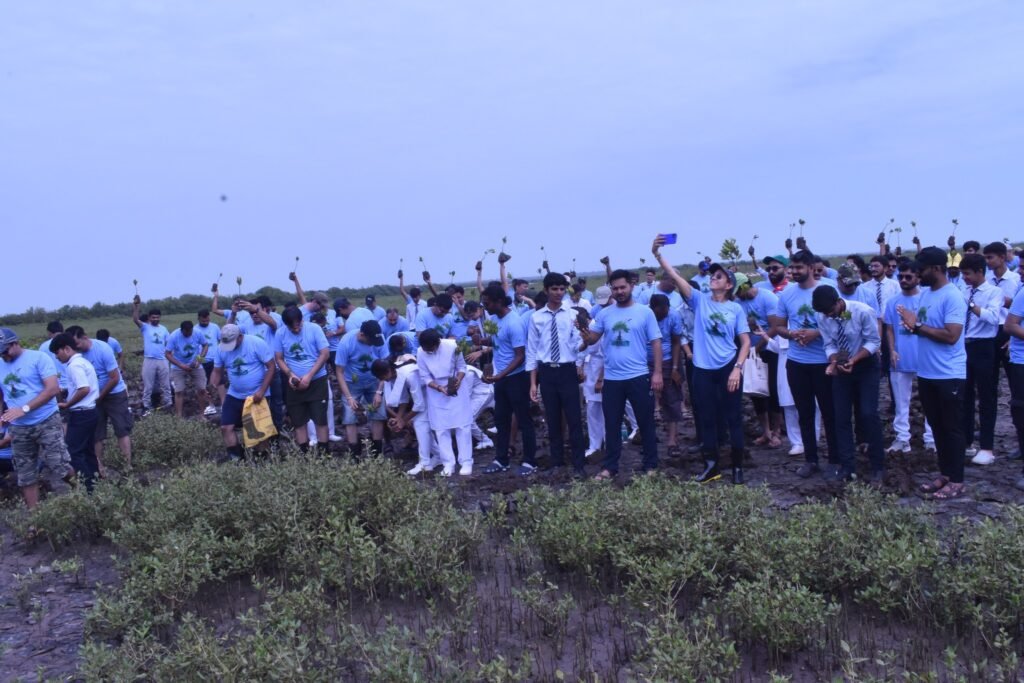
Biodiversity conservation, by its very nature, requires local stewardship and community engagement to succeed. A local wetland cannot be kept healthy by an algorithm or a distant corporate office; it requires the daily care, traditional knowledge, and active protection of the people who live alongside it. When international finance adapts to the TNFD framework, funding flows directly to projects that can demonstrate real, tangible ecological restoration on the ground. This creates a direct pipeline of financial resources for local communities, allowing them to fund public education, build resilient local infrastructure, and create sustainable, nature-positive economies that do not rely on destroying their natural heritage.
Practical Blueprints for Nature-Positive Social Welfare
To turn this concept into reality, the Drishti Foundation Trust proposes a practical framework that blends cutting-edge environmental science with community-driven social development:
I. Biodiversity-Linked Microfinance
We advocate for the creation of community-level microfinance systems that reward local farmers and small business owners for maintaining biodiversity on their property. For example, a rural cooperative could receive low-interest loans or direct financial grants if they leave a percentage of their land as a wild, biodiverse corridor for local pollinators and wildlife, rather than clearing every square meter for monoculture crops. This aligns financial success with ecological health at the individual level.
II. Community-Managed Ecological Reserves
Local governments should grant legal land titles and co-management rights to indigenous and traditional communities to protect vital ecosystems like wetlands and native forests. These communities can be directly compensated using funds from international nature-focused financial instruments, turning conservation into a viable, long-term employment option for rural youth and reducing economic migration to overcrowded cities.
III. Localized Biodiversity Audits
By utilizing affordable, open-source technology—such as community-sourced environmental DNA (eDNA) sampling and mobile biodiversity mapping apps—local schools and grassroots NGOs can conduct scientific audits of their local ecosystems. This transparent data can be uploaded directly to global TNFD-compliant registries, allowing communities to independently prove the ecological value of their lands and attract ethical, nature-positive investments without relying on expensive international consultants.
Conclusion: A Resilient Future Built on Natural Wealth
The era of treating the natural world as a passive carbon warehouse is officially over. As the High Seas Treaty reshapes global ocean governance and the TNFD framework rewrites the rules of international corporate finance, biodiversity has emerged as the definitive metric for 21st-century conservation. This transition represents a profound victory for social equity and global sustainability. It moves our focus away from abstract accounting tricks and brings it back to the living, breathing ecosystems that support human life on earth.
For the Drishti Foundation Trust, this evolution reinforces our core philosophy: human welfare and environmental health are parts of a single, deeply interconnected system. By protecting and restoring our local wetlands, mangroves, and native forests, we are not just saving endangered species or sequestering carbon emissions. We are building a dynamic, self-repairing insurance policy against natural disasters, securing clean water and food for our children, and creating an equitable economic system that values nature for its vibrant life rather than its destruction. The true wealth of a community is found in the biological diversity of its surrounding environment and by investing in that diversity, we build a secure, just, and resilient future for all.
“Reach out to explore collaborations, discover our initiatives, and contribute to creating meaningful, lasting change.”
Facebook: https://www.facebook.com/DrishtiFoundationTrust/
Instagram : https://www.instagram.com/drishtifoundation
Youtube : https://www.youtube.com/drishtifoundationtrust
Linkedin : https://www.linkedin.com/company/drishtifoundationtrust
Twitter : https://www.twitter.com/dftindia
Related Post

Income Tax Act 2025 for NGOs: New Compliance Rules, Changes from the 1961 Act and Benefits for Charitable Organisations
The Income Tax Act, 2025 introduces a reorganised compliance framework for NGOs and charitable organisations [...]

The Importance of Maha Kumbh in India: A Sacred, Cultural, and Environmental Phenomenon
Drishti Foundation Trust recognizes the multifaceted significance of the Maha Kumbh Mela. [...]
Reviving History: The Resurrection of “Bottar Kotha Ni Vav” in Mehsana
Introduction Under its Water Conservation Initiative Drishti Foundation Trust took responsibility In the heart of [...]