The 1.5°C Overshoot: Why Climate Resilience is the New Frontier of Social Equity
In the mid-2010s, the global scientific community established 1.5°C as a critical guardrail a “safe” limit for atmospheric warming on Climate Resilience. As we navigate the complexities of 2026, that guardrail is increasingly viewed through the rearview mirror. According to the latest synthesis of meteorological data, humanity has entered the “Overshoot Era.” This is a period where global mean temperatures consistently exceed the 1.5°C limit, triggering feedback loops that were once relegated to “worst-case” computer models.
For the Drishti Foundation Trust, the overshoot is not merely a statistical failure of global policy; it is a profound crisis of Social Equity. The physics of climate change may be universal, but the impact is hyper-local and deeply discriminatory. While a temperature rise of 1.5°C might mean a slightly higher electricity bill for an affluent household in a developed city, for a subsistence farmer or an urban slum dweller, it represents a catastrophic breach of their fundamental right to life, health, and dignity.
To address this, we must redefine Climate Resilience. It can no longer be defined solely by the height of a sea wall or the efficiency of a carbon scrubber. True resilience in 2026 is measured by the narrowing of the gap between those who can afford to adapt and those who are left to the mercy of the elements.
1. The Anatomy of the 1.5°C Overshoot
To solve a problem, we must first understand its current mechanics. The “Overshoot” is characterized by three distinct phenomena that directly impact social welfare:
- Non-Linear Weather Patterns: In 2026, the predictability of monsoons and seasonal cycles has decayed. This “weather whiplash” moving from extreme drought to flash flooding within weeks destroys the traditional knowledge systems of indigenous and agricultural communities.
- The Accumulation of Adaptation Debt: Each year a community spends recovering from a flood is a year they cannot invest in education, healthcare, or economic growth. This is “Adaptation Debt,” a cycle that keeps vulnerable nations and neighbourhoods in a state of perpetual emergency.
- Tipping Points and Displacement: We are seeing the first wave of “Permanent Climate Refugees” communities whose lands are not just temporarily flooded, but have become geologically or thermally uninhabitable.
2. The “Cooling Gap” and Urban Social Equity
One of the most visible manifestations of climate inequality is the Cooling Gap on Climate Resilience. In 2026, heat is the leading climate-related cause of mortality. However, heat does not strike a city uniformly.
Urban Heat Islands (UHI) as Segregation Tools
In major metropolitan areas, high-density, low-income neighborhoods often lack “green lungs” parks, trees, and bodies of water. These areas become Urban Heat Islands, where concrete and asphalt trap solar radiation, keeping nighttime temperatures significantly higher than in affluent, canopy-covered suburbs.
The Drishti Foundation Trust Research Insight: Our 2026 field studies indicate that residents in informal settlements experience indoor temperatures up to 7°C higher than the ambient outdoor temperature due to poor ventilation and heat-conductive roofing materials (like corrugated iron).
Resilience Strategy: Passive Cooling and Public Commons
Equity-driven resilience requires:
- The Right to Shade: Establishing mandatory “Green Canopy” quotas for low-income districts.
- Public Cooling Centers: Treating thermal comfort as a public utility, similar to water or electricity, where the state provides accessible, renewably-powered cooling spaces during peak heat events.
3. Hydrological Accountability: Water as a Human Right
As the overshoot intensifies, the global water cycle is accelerating. We are seeing “too much water” in the form of catastrophic atmospheric rivers and “too little water” in the form of groundwater depletion.
The Privatization of Scarcity
A significant threat to social equity is the “commodification of water.” When public water systems fail due to climate stress, the wealthy pivot to private tankers and desalination tech. The marginalized are forced to rely on unregulated, often contaminated, “water mafias.”
Resilience Strategy: Decentralized Water Sovereignty
The Drishti Foundation Trust advocates for Decentralized Water Management:
- Community Rainwater Harvesting: Moving away from giant, environmentally damaging dams toward neighborhood-scale collection systems.
- Smart Water Grids: Utilizing 2026 IoT (Internet of Things) technology to track leakages and ensure equitable distribution, preventing industrial over-extraction at the expense of local aquifers.
4. Gendered Vulnerability: The Hidden Face of Climate Change
A core pillar of our mission at Drishti Foundation Trust is the recognition that Climate Change is not gender-neutral. * Time Poverty: In water-stressed regions, women and girls bear the burden of walking increasingly long distances to secure water. This “Time Poverty” is a direct thief of educational and economic opportunity.
- Health Risks: Extreme heat and smoke from wildfires (increased by the overshoot) have a documented, disproportionate impact on maternal health and neonatal outcomes.
Resilience Strategy: Gender-Responsive Budgeting
Climate resilience funds must be directed toward women-led cooperatives. Research shows that when women control local resource management, the outcomes for community resilience are significantly higher. We advocate for “Climate-Smart Microfinance” specifically tailored for female entrepreneurs in the global south for Climate Resilience.
5. Food Sovereignty in the Overshoot Era
Agriculture is the sector most sensitive to the 1.5°C threshold. The traditional “Green Revolution” models of high-input, chemical-heavy farming are failing under the stress of 2026’s erratic climate.
The Digital Divide in Farming
Precision agriculture using drones and AI to optimise crop yields is a powerful tool for climate resilience. However, if this technology is only accessible to large-scale industrial farms, it will further marginalize smallholder farmers who provide 70% of the world’s food.
Resilience Strategy: Open-Source Agritech
We believe in the Democratization of Agricultural Data. By providing small-scale farmers with free access to satellite-based soil moisture data and localized weather forecasting via simple mobile interfaces, we can level the playing field.
6. Nature-Based Solutions: The Wealth of the Poor
Nature-based solutions (NbS) such as mangrove restoration, reforestation, and wetland protection are often the most cost-effective resilience tools. Crucially, they provide “ecosystem services” that the poor rely on for their livelihoods for Climate Resilience.
The “Green Grabbing” Risk
A critical equity concern is Green Grabbing, where large corporations or states seize indigenous lands for “carbon credits” or conservation projects.
The Drishti Foundation Trust Position: No climate project is sustainable if it displaces the people who have been the traditional stewards of that land. Resilience must be built with local communities, ensuring they have legal title to the carbon and biodiversity value of their ecosystems.
7. The Just Transition: Labor and the New Economy
As we transition to a green economy to mitigate the overshoot, we must ensure a “Just Transition.” Skill Bridging:Workers in “brown” industries (coal, traditional manufacturing) must be prioritized for retraining in “green” sectors (renewable energy, circular waste management).
Safety Nets: During extreme weather events, “Climate Unemployment Insurance” should be implemented to protect daily wage laborers whose work is halted by heatwaves or floods.
8. Institutional Frameworks: Global Solidarity for Local Action
The 1.5°C overshoot is a global phenomenon that requires a radical shift in international finance. The Loss and Damage Fund established in previous COPs must be fully operationalized and accessible directly by NGOs and local municipalities, bypassing the bottlenecks of national bureaucracy.
The Role of the Drishti Foundation Trust
As an expert organization, our role in 2026 is to act as a bridge. We translate complex climate data into actionable community strategies. We advocate for:
Climate-Inclusive Social Protection: Integrating climate risk into existing poverty-alleviation programs.
Resilience Audits: Helping local governments identify “Vulnerability Hotspots” through AI-driven mapping and community feedback.
9. Conclusion: A Manifesto for a Resilient Future
The 1.5°C overshoot is a wake-up call that the old models of “sustainability” were too passive. Sustainability in 2026 is about Active Restoration and Radical Equity. We cannot “engineer” our way out of the climate crisis if we leave half the population behind. A solar-powered city is not resilient if its workers are collapsing from heat in the streets. A coastal region is not resilient if its mangroves are protected but its people are starving.
The Drishti Foundation Trust remains steadfast in its belief that the environment and social welfare are a single, unified cause. By focusing on the most vulnerable, we build a foundation of resilience that benefits all of humanity. The overshoot is a test of our collective empathy and it is a test we must pass.
Call to Action
Are you a researcher or policymaker working on equitable adaptation?
Join the Drishti Foundation Trust in our mission to map and mitigate the 1.5°C overshoot impact. Together, we can turn climate vulnerability into community strength.
“The climate doesn’t discriminate, but our systems do. Resilience is the tool we use to fix that.” – Drishti Foundation Trust, 2026.
“Reach out to explore collaborations, discover our initiatives, and contribute to creating meaningful, lasting change.”
Facebook: https://www.facebook.com/DrishtiFoundationTrust/
Instagram : https://www.instagram.com/drishtifoundation
Youtube : https://www.youtube.com/drishtifoundationtrust
Linkedin : https://www.linkedin.com/company/drishtifoundationtrust
Twitter : https://www.twitter.com/dftindia
Related Post

Income Tax Act 2025 for NGOs: New Compliance Rules, Changes from the 1961 Act and Benefits for Charitable Organisations
The Income Tax Act, 2025 introduces a reorganised compliance framework for NGOs and charitable organisations [...]
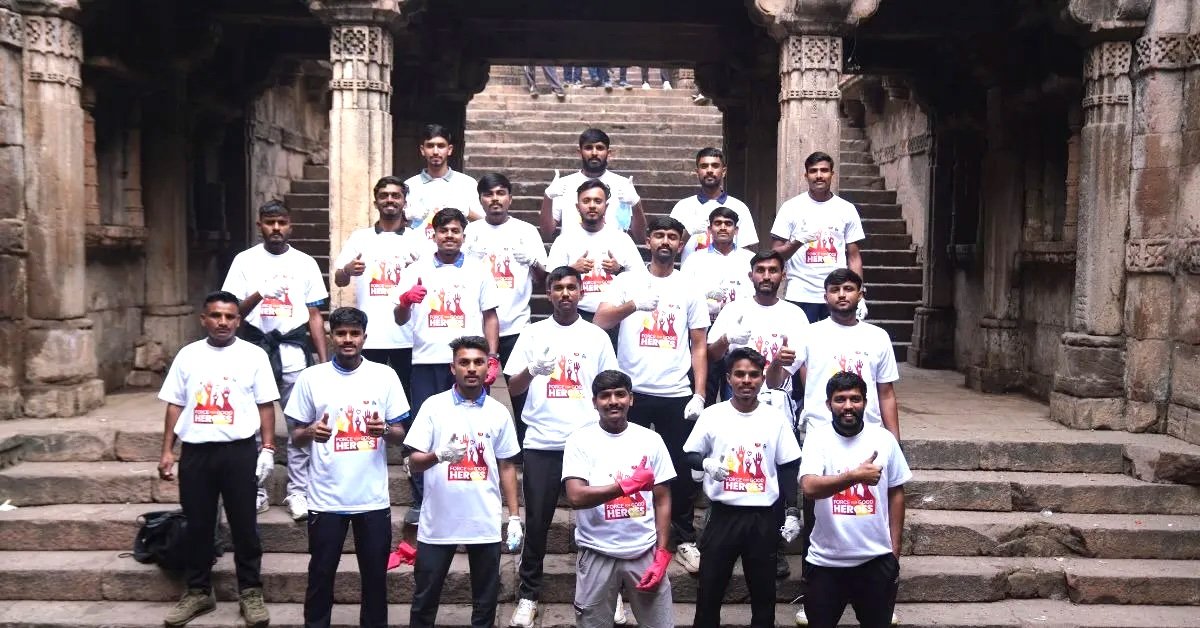
Reviving India’s Water Heritage: Drishti Foundation Trust Restores a 900-Year-Old Stepwell in Mehmadabad
Drishti Foundation Trust restored a 900-year-old historic stepwell in Mehmadabad, Kheda district, Gujarat, with support [...]