Standing Together in Crisis: Drishti Foundation Trust’s Humanitarian Response to Flash Floods in Arunachal Pradesh
Restoring Hope Through Coordinated Disaster Relief and Community Resilience in Himalayan Region
The devastating flash floods that struck several parts of Arunachal Pradesh have once again demonstrated the increasing vulnerability of India’s Himalayan region to climate-induced disasters. Torrential rainfall, overflowing rivers, landslides, and widespread damage to infrastructure disrupted thousands of lives, leaving many communities isolated and in urgent need of humanitarian assistance. Beyond the visible destruction of homes, roads, and public infrastructure, the disaster affected livelihoods, education, healthcare, food security, and the overall well-being of vulnerable populations. During such challenging times, humanitarian response extends far beyond the distribution of relief materials. It becomes an expression of solidarity, compassion, and collective responsibility towards communities struggling to rebuild their lives.
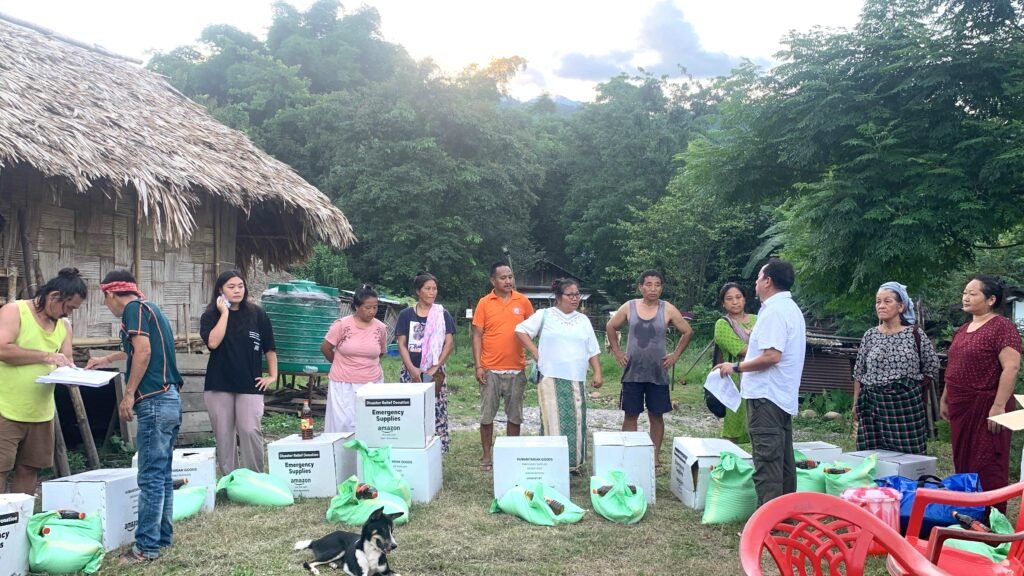
Recognizing the urgency of the situation, Drishti Foundation Trust, in close coordination with the State Disaster Management Authority (SDMA), District Disaster Management Authorities, district administrations, local authorities, and community leaders, initiated relief operations to support families affected by the flash floods. Guided by the humanitarian principles of humanity, neutrality, impartiality, and accountability, the organization focused on ensuring that essential assistance reached the most vulnerable households, including women, children, elderly persons, persons with disabilities, and economically weaker families. Every intervention was designed to complement the ongoing efforts of the Government while strengthening local capacities and ensuring that relief reached remote and inaccessible communities in a transparent and efficient manner.
Arunachal Pradesh’s unique geography presents both extraordinary natural beauty and significant disaster risks. Situated in the Eastern Himalayan Region, the state is characterised by steep mountain slopes, dense forests, high rainfall, and numerous fast-flowing rivers. During the monsoon season, intense rainfall frequently causes rivers to swell rapidly, triggering flash floods, landslides, riverbank erosion, and road collapses. Entire villages can become disconnected from nearby towns within a matter of hours, making rescue and relief operations particularly challenging. Climate scientists have consistently observed that changing rainfall patterns associated with climate change are increasing the frequency and intensity of such extreme weather events across mountainous regions, making disaster preparedness and climate resilience more important than ever before.
Immediately after receiving information regarding the evolving flood situation, Drishti Foundation Trust activated its disaster response mechanism and began coordinating with government authorities to assess urgent humanitarian needs. The primary objective of the relief mission was to reduce immediate human suffering by ensuring timely access to essential supplies for affected families while supporting the coordinated response being led by the State Disaster Management Authority and district administrations. Rapid coordination among government agencies, civil society organizations, volunteers, and local communities enabled relief operations to be organized efficiently despite difficult terrain and continuously changing weather conditions.
One of the defining strengths of the relief mission was the close collaboration between Drishti Foundation Trust and various government institutions responsible for disaster management. The State Disaster Management Authority, District Disaster Management Authorities, Deputy Commissioners, Circle Officers, village authorities, local police, healthcare departments, and grassroots volunteers worked together to identify the worst-affected communities, assess priority needs, and facilitate the safe distribution of humanitarian assistance in Himalayan Region. Such institutional collaboration ensured that available resources were utilized efficiently, duplication of efforts was minimized, and assistance reached those who needed it the most. This partnership also reinforced the importance of coordinated disaster governance in responding effectively to large-scale emergencies.
Delivering humanitarian assistance in Arunachal Pradesh of Himalayan Region requires overcoming significant logistical challenges. Many villages are located in remote mountainous regions where transportation networks are limited even under normal circumstances. Following heavy rainfall and landslides, roads often become impassable, bridges may be damaged, and communication networks can be disrupted. Relief teams frequently have to revise transportation plans based on changing ground conditions while ensuring the safety of volunteers and local residents. Despite these operational difficulties, Drishti Foundation Trust continued its efforts to ensure that relief materials reached affected communities without unnecessary delay. The determination shown by government officials, volunteers, transport personnel, and local citizens demonstrated the remarkable resilience that emerges during times of crisis.
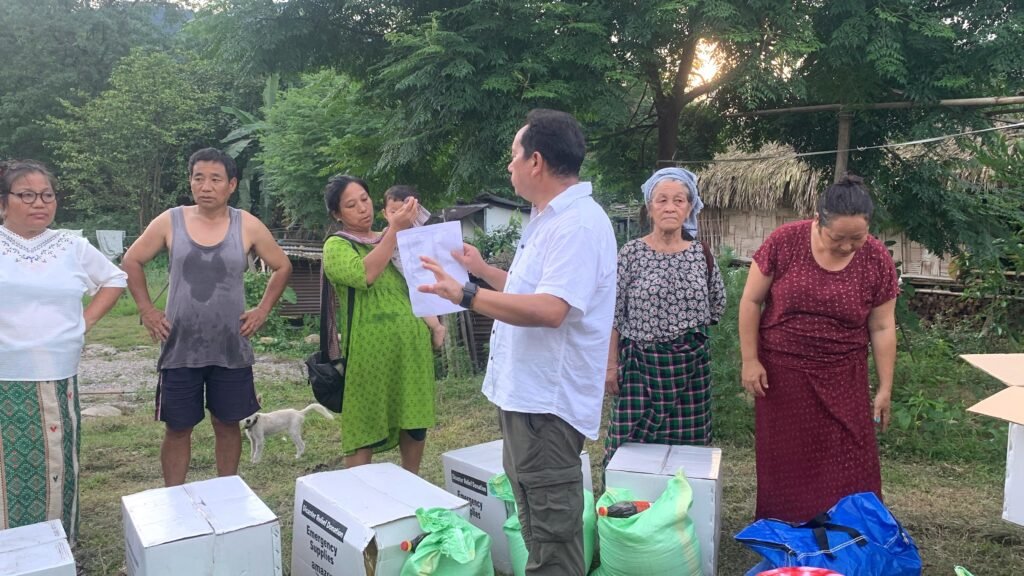
The relief operation primarily focused on addressing the immediate humanitarian needs of flood-affected families through the distribution of essential supplies. Relief materials included dry ration kits containing staple food items such as rice, pulses, cooking oil, sugar, salt, and other daily necessities required by households facing food insecurity. Hygiene materials and other emergency household essentials were also distributed wherever required to help families maintain basic standards of health and sanitation during the emergency period. Every distribution exercise was conducted in close coordination with local authorities and community representatives to ensure fairness, transparency, and accountability. Priority was consistently given to households identified as highly vulnerable based on age, disability, economic conditions, family size, and accessibility.
An important lesson reinforced by the relief mission is that humanitarian assistance is most effective when communities themselves become active participants in the response process. Throughout the operation in Himalayan Region, local residents played an essential role in identifying vulnerable families, facilitating communication between relief teams and affected villages, supporting transportation, organizing distribution points, and assisting government officials. Their knowledge of local geography, community dynamics, and household needs significantly improved the efficiency of relief operations. Disaster resilience cannot be built solely through external interventions; it requires strong community participation, local leadership, and collective ownership of recovery efforts.
Volunteers remained at the heart of the humanitarian response. Working under challenging weather conditions and often in physically demanding environments, they dedicated countless hours to packaging relief materials, loading vehicles, coordinating logistics, verifying beneficiary lists, documenting distributions, and supporting local administration. Their willingness to serve communities during times of adversity reflects the spirit of humanitarian service that continues to inspire disaster response efforts across India. Every volunteer contributed not only through physical work but also by providing emotional support and reassurance to families experiencing uncertainty and distress.
While the immediate objective of disaster relief is to save lives and alleviate suffering in Himalayan Region, every humanitarian mission also provides valuable insights into the broader challenges posed by climate change. Scientific studies increasingly indicate that rising global temperatures are contributing to more frequent and intense rainfall events, particularly in ecologically fragile mountain ecosystems. Flash floods, landslides, riverbank erosion, and changing river dynamics are becoming increasingly common, posing serious threats to both human settlements and biodiversity. The disaster in Arunachal Pradesh serves as another reminder that climate adaptation, environmental conservation, and disaster risk reduction must become integral components of long-term development planning.
The experience of responding to the floods further highlights the importance of strengthening disaster preparedness at the community level. Investment in early warning systems, disaster education, school safety programmes, community-based disaster risk reduction initiatives, resilient infrastructure, watershed management, and ecosystem restoration can significantly reduce future disaster risks. Empowering local communities through awareness programmes, volunteer training, mock drills, and institutional capacity building enables them to respond more effectively during emergencies while reducing dependence on external assistance.
Drishti Foundation Trust believes that sustainable recovery extends beyond the distribution of relief materials in Himalayan Region. Long-term resilience requires restoring livelihoods, rebuilding community infrastructure, protecting natural ecosystems, promoting climate-resilient development, and strengthening partnerships among government institutions, civil society organizations, academic institutions, corporate partners, and local communities. Humanitarian assistance should therefore serve as the foundation for sustainable recovery rather than merely an emergency intervention. Integrating environmental restoration, afforestation, watershed conservation, biodiversity protection, and climate adaptation into post-disaster recovery planning will help reduce the vulnerability of future generations.
The organization expresses its sincere gratitude to the State Disaster Management Authority, district administrations, local authorities, volunteers, community leaders, donors, development partners, and every individual who contributed to the success of the relief mission in Himalayan Region. Their unwavering cooperation, dedication, and commitment transformed humanitarian assistance into a collective effort driven by compassion and shared responsibility. Every relief operation demonstrates that effective disaster management is never the responsibility of a single institution but the result of coordinated action among multiple stakeholders working towards a common humanitarian objective.
As India continues to face increasing climate-related disasters, strengthening collaboration between governments, humanitarian organizations, academic institutions, corporate partners, and local communities will become increasingly important. Drishti Foundation Trust remains committed to supporting disaster preparedness, emergency response, climate resilience, environmental conservation, and sustainable development across the country. The organization’s experience in Arunachal Pradesh reinforces its belief that resilient communities are built not only through infrastructure but also through trust, preparedness, local participation, and compassionate partnerships.
The flash floods in Arunachal Pradesh serve as a powerful reminder of both the destructive force of nature and the extraordinary resilience of human communities. Although disasters leave behind immense challenges, they also reveal the strength of collective action, the dedication of volunteers, and the importance of institutional collaboration. Through its humanitarian response, Drishti Foundation Trust reaffirmed its commitment to standing beside vulnerable communities during times of crisis while contributing to long-term resilience and sustainable recovery. Together, by combining compassion with preparedness and humanitarian action with sustainable development, we can build safer, stronger, and more resilient communities capable of facing the growing challenges of a changing climate.
“Reach out to explore collaborations, discover our initiatives, and contribute to creating meaningful, lasting change.”
Facebook: https://www.facebook.com/DrishtiFoundationTrust/
Instagram : https://www.instagram.com/drishtifoundation
Youtube : https://www.youtube.com/drishtifoundationtrust
Linkedin : https://www.linkedin.com/company/drishtifoundationtrust
Twitter : https://www.twitter.com/dftindia